
Deployable Modular SCIFs for Remote or Temporary Operations
Though a “T-SCIF” is often mentioned in reference to a portable facility, better and safer options are available for use in a forward-operating position.
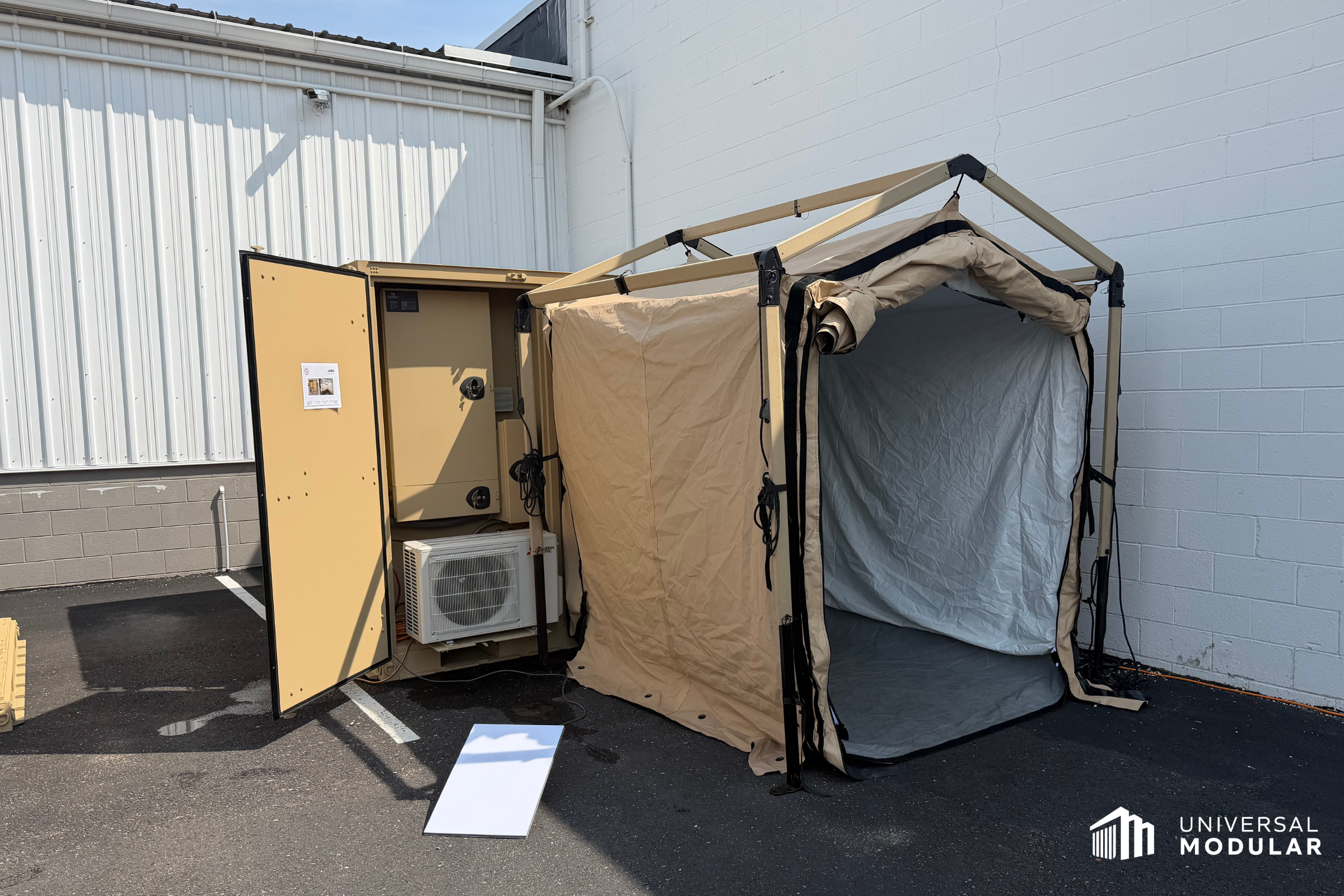
It’s possible to have a deployable modular SCIF that fully meets ICD 705 requirements without resorting to a T-SCIF.
Modular SCIFs (Sensitive Compartmented Information Facilities) typically must meet stringent requirements to earn accreditation. This is because a SCIF is, by definition, used in the handling or storage of sensitive information that, if accidentally leaked, could lead to the loss of human life.
Mobile SCIFs in particular are often deployed in risky situations, where the protection of sensitive information is crucial to the success of a mission. This is the main reason why it’s essential that a portable SCIF meets or exceeds all ICD 705 requirements for permanent accreditation—and this is where T-SCIFs (temporary SCIFs) fall short.
There exists a common assumption that any kind of mobile SCIF is a T-SCIF, similar to how a popular brand name can become synonymous with an item itself (Kleenex, for example, or Tupperware). In this case, there is a very important distinction between a T-SCIF and the type of portable SCIF that an accrediting official (AO) will approve for permanent accreditation.
When Are T-SCIFs Used?
T-SCIFs are typically used temporarily in situations where storing or handling sensitive information in a fixed facility is not possible, nor is there time to transport a deployable modular SCIF to a designated area where a temporary military base—also known as a forward-operating base or a forward-operating position—is set up to support strategic military objectives.
In extreme circumstances, a tent may have to suffice as a T-SCIF, with razor wire wrapped around the area, sound masking added, and a 24-hour armed guard on patrol for as long as the forward-operating position is required.
There are times when this kind of suboptimal solution is the only option. But for anyone planning ahead with the knowledge that their program will require a mobile SCIF, it is safer to pick one that meets or exceeds all the same requirements as a traditional fixed facility.
What’s the Difference?
The term “T-SCIF” refers to a facility that will be deployed to a location where it is impossible to meet the construction standards of a fixed facility. An AO will grant a T-SCIF temporary accreditation for up to one year.
However, modular SCIF options that do meet or exceed all ICD 705 requirements for permanent accreditation are available.
Alternative options include 10-, 20-, and 40-foot container SCIFs, which are built out of empty ISO shipping containers and fabricated to meet the same requirements of a fixed facility. These products are designed to be transportable by air, land, and sea. The Joint Airlift Micro SCIF (JAMS) is an even smaller option and serves as the only known air-transportable SCIF that exceeds all ICD 705 requirements.
A client who does not need their mobile SCIF to permanently meet the strict ICD 705 requirements of a fixed facility may select one of these options and choose to use it as a T-SCIF. However, all of Universal Modular Inc.’s (UMI) products are built to meet the same requirements of a fixed SCIF—including exceeding STC (sound transmission class) 50 and 100 dB of RF (radio frequency) shielding.
Why It’s Important to Meet ICD 705 Requirements
A T-SCIF may not cost as much money as a portable SCIF that meets or exceeds all the requirements of a fixed facility. The real question is: What is one human life worth?
In the earlier example, a tent may be used as a T-SCIF in less than ideal circumstances. While all possible measures may be taken to protect the sensitive information within that temporary SCIF, it is impossible to prevent some classified emanations from spewing out.
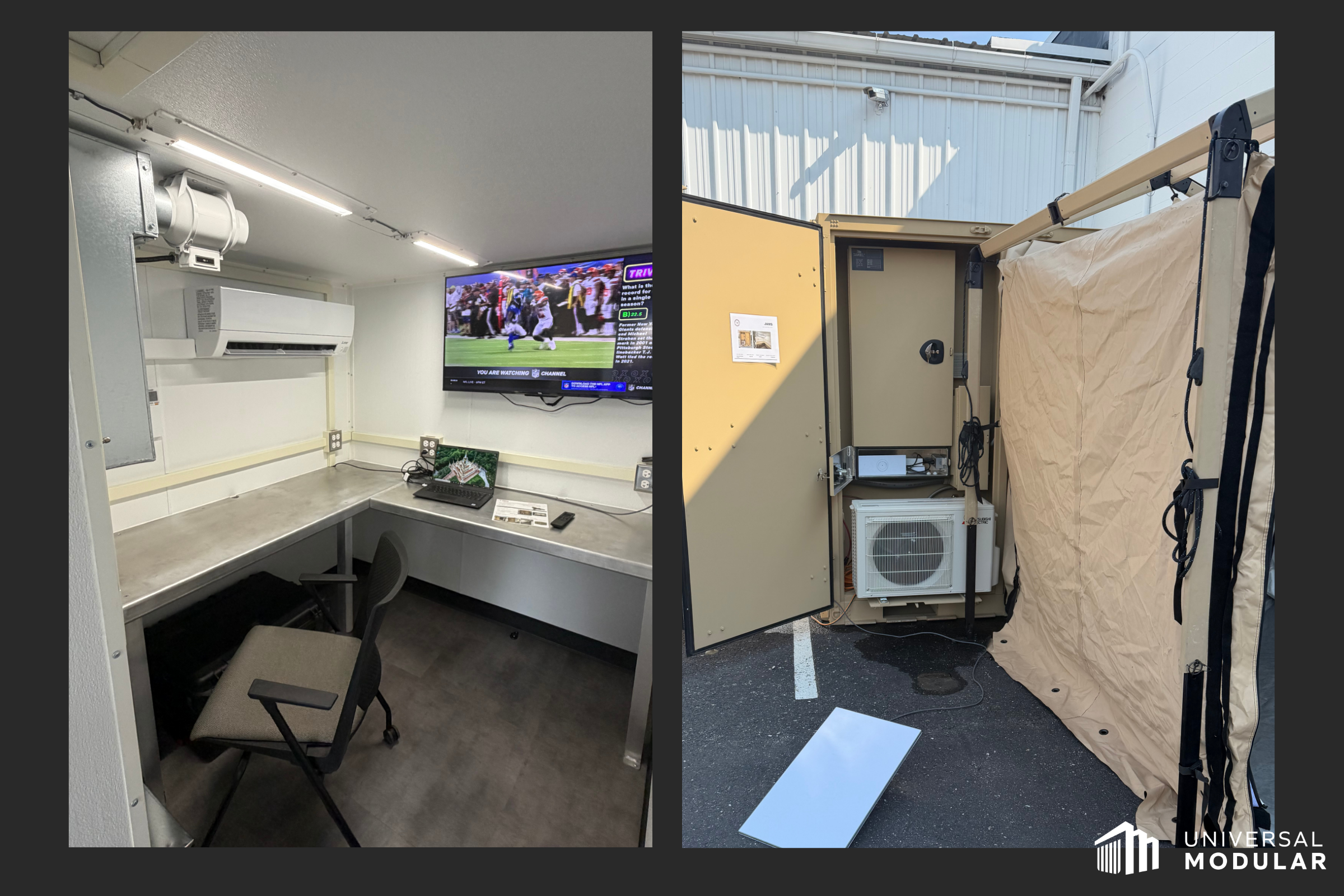
Over the years, T-SCIFs became popular because there were few other options on the market for forward-deployable SCIFs. But that has changed. Today, there is no need to compromise on acoustic or RF performance in a forward-operating position.
In a presidential executive order signed in 2009, the U.S. government outlined a system for the classification and safeguarding of national security information. That executive order included the below definitions:
“‘Top Secret’ shall be applied to information, the unauthorized disclosure of which reasonably could be expected to cause exceptionally grave damage to the national security.”
“‘Secret’ shall be applied to information, the unauthorized disclosure of which reasonably could be expected to cause serious damage to the national security.”
These definitions drive home the point that SCIFs are used in scenarios in which national security—and, by extension, human life—is under threat.
The evolution of modular SCIFs and the introduction of products like the JAMS unit provide safer portable SCIF options than were previously available. And while there will be occasional circumstances in which a traditional T-SCIF must be used, that should be the exception, not the rule.
If you’re considering a modular SCIF solution, download UMI’s Modular SCIF Planning Worksheet to start collecting the necessary information. Or contact UMI today to start exploring your modular SCIF options and to get a quote.