
The 4 Variables That Give Container SCIFs Their Speed
Why does it take less time to fabricate a container SCIF than it does to construct a secure facility on-site? The answer boils down to four impactful variables.
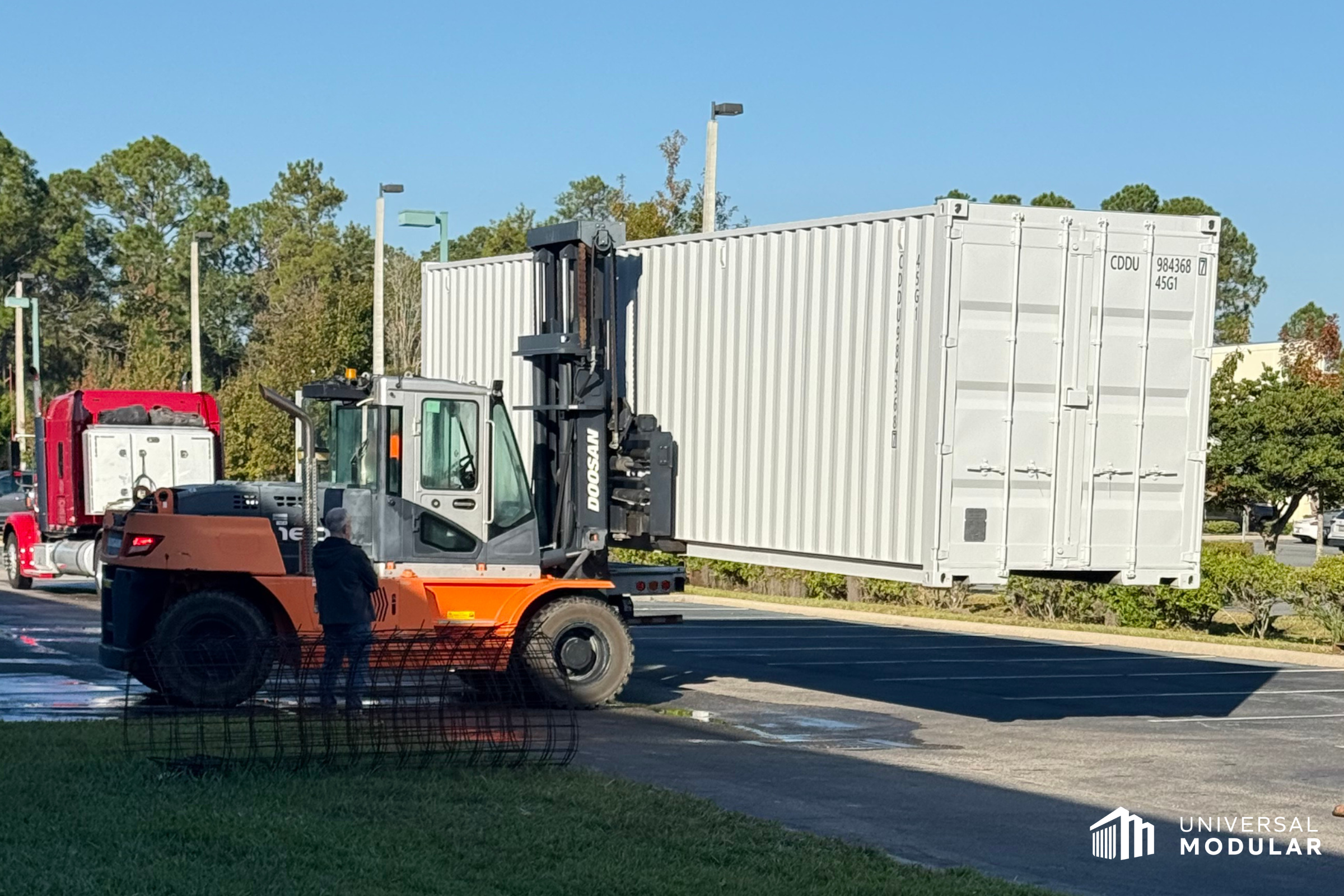
A container SCIF, built into an ISO shipping container, is much faster to fabricate than any other kind of secure facility.
One of the main benefits of choosing a container SCIF (Sensitive Compartmented Information Facility) over a secure facility built on site is that a container SCIF is faster to fabricate.
But why is that?
There are four main reasons, each of which is explored below. The short answer is that the teams who build container SCIFs use verified construction methods that are repeatable on a static platform.
1. Design Process Accelerated Amid Fewer Customization Options
First, it may be helpful to recall that a container SCIF (sometimes referred to as a “SCIF-in-a-box”) is a mobile SCIF fabricated by building out an unaltered ISO shipping container. These shipping containers are relatively limited in size: They are 8 feet wide, 8.5 or 9.5 feet high, and either 10, 20, or 40 feet in length. The air-transportable Joint Airlift Micro SCIF (JAMS) unit by Universal Modular Inc. (UMI) provides a smaller alternative with about 40 usable square feet inside.
Because there are few size options for a container SCIF, the opportunities for design customization are similarly few in number. There are some variables, such as interior and exterior finishes, that differ from one facility to the next. However, these account for a small percentage of the overall design.
An estimated 90% of the fabrication process is identical for all container SCIFs. The wall build-up, for example, is the same, as is the location of the door’s placement. This consistency cuts down on the time needed to finalize a facility’s design.
2. Lead Time for Materials Either Reduced or Eliminated
While other secure facilities are built on site, container SCIFs are fabricated in a factory setting. With on-site builds, the location must first be prepared for construction, and the necessary materials must be delivered before work can begin.
In contrast, many of the materials used in building a container SCIF are often already present in the facility where the ISO shipping container will be converted. This links back to how most of a container SCIF’s design is unchanged from one to another. Because the design differences are limited, most of the materials used are the same—and the team providing those materials already has their supply chain set up.
It can be helpful when the fabrication team already possesses the door, for example, or another component needed for a container SCIF that similarly tends to have a long lead time. In the event of a speedy design approval by the project’s accreditation official (AO), having these materials already on hand can save one or two months’ time.
3. Fabrication Team Provides Consistency
A modular construction company’s fabrication teams are well-versed in the container SCIF build process. These employees are creating container SCIFs over and over again, with the highly repeatable design and fabrication process leading to efficient and accurate work.
Modular construction fabrication teams know what is normal in building a container SCIF. They can quickly identify whether anything seems off and raise a red flag if concerns arise. This, however, is rarely necessary due to their level of expertise and the consistency of their work.
4. Lack of Site-related Environmental Concerns
An on-site construction team may encounter several variables each day—ranging from inopportune weather to delayed material deliveries—that could negatively impact their project’s completion timeline. These environmental concerns don’t exist for container SCIFs, however, because modular facilities are built in a factory setting and delivered later to their intended destination.
Unlike traditional construction projects, a modular construction team doesn’t need to wait for materials to be transported to the facility’s final site. Instead, all materials will be delivered to the factory where the container SCIF is undergoing fabrication—and many materials may already be in stock.
If a secure facility is being built inside an existing facility, the on-site construction team may have to work around the schedules of others in the building, restrict their work hours in accordance with neighborhood sound ordinances, pause operations to accommodate for other events in the vicinity, or even temporarily halt work when the amount of dust or noise they are creating becomes overwhelming for others.
In contrast, a container SCIF’s fabrication team doesn’t have to follow a traditional construction schedule—and they always have the option to work on weekends, if necessary, to meet a tight deadline. Additionally, no one unrelated to the fabrication process is around who could be impacted by the team’s work.
Since the fabrication teams are building container SCIFs inside a factory setting, they are not encountering the types of common roadblocks that on-site construction teams often face.
Are you ready to start work on your container SCIF? Contact UMI today to get a quote.