
How to Phase Modular Installations in Phased Projects
When a significant amount of secure workspace is needed, dividing the construction task into multiple modular buildings can help the project be mission-ready faster.
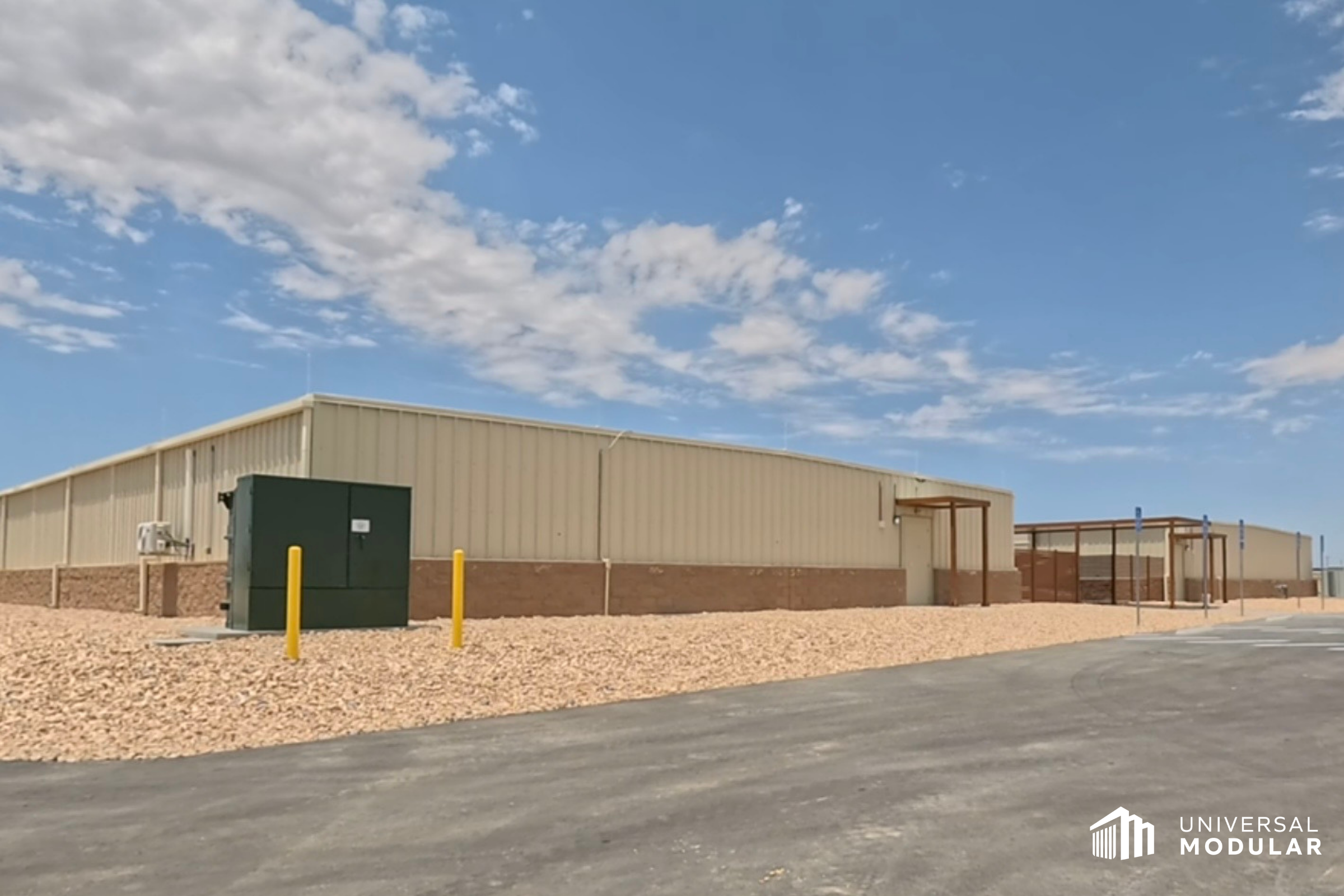
Picture this: You are preparing to take on a project that will, for the purposes of this example, require a 100,000-square-foot building in which hundreds of employees will work. Getting the facility built and operational through the traditional construction process will be a huge undertaking—one that likely won’t be completed for three to five years, if not much longer.
But what if there was a way to get part of the space ready—and the project started—faster?
This is a possibility within grasp with modular construction. All that’s required is breaking up the endeavor into chunks so that instead of creating a single 100,000-square-foot building, the modular construction team is fabricating four or five 25,000- or 20,000-square-foot facilities to complete the square footage.
This phased approach provides the kind of timing and funding flexibility that benefit large-scale projects, and is already being used by some U.S. Department of War branches. Though this strategy doesn’t necessarily work for every project, there are many benefits to consider, starting with how much faster the project can become operational.
The Challenges of Constructing Large-Scale Buildings
There are two main inconveniences associated with constructing a large-scale building from the ground up:
It must be completely built before anyone can move in and begin using the space.
If the space is intended for the storage or handling of classified materials, it also needs to be accredited before it can be used.
The phased approach made possible by modular construction is particularly beneficial for projects that don’t need the entirety of the space right away. In some cases, a large facility may be needed for the entire lifecycle of a project, but the space’s full workforce won’t all be arriving on Day 1. By ramping up the amount of space available over time, a quarter of what is needed could be built, installed, and fully operational several months faster than is possible through the typical construction process.
The Benefits of a Phased Approach
Crafting a design for a single 100,000-square-foot building is a difficult and timely task. But creating and gaining approval for a repeatable 25,000-square-foot modular building design can save months before fabrication even begins. The modular construction team is also better able to phase out material procurement with this strategy. (It’s easier to secure 10 air conditioning units at once, for example, than it is to get 50.)
Additionally, this phased approach comes with financing and scheduling flexibilities that make it possible to get programs underway faster.
Breaking Up the Costs
When an order is placed for a single large building, the cost is lumped up into one big bill. But when orders for several smaller buildings are placed separately, the total cost is broken up into segments and spread out over time, making it easier to budget for the project as a whole. The first one or two modular buildings may be paid for in one fiscal year, for example, while the remaining two are afforded in the following year.
Breaking up the cost in this way does involve a bit of an increase and wouldn’t make sense for a program that only needs a 4,000-square-foot facility. However, that increase is almost negligible when considering the total cost of a project 10 times that size or larger.
Another factor that could affect cost over time is the price of the materials used. Material costs fluctuate over time and are difficult to predict. This means that a client who purchases a single large-scale building is locking in the material costs as they exist in that moment. By purchasing multiple smaller buildings over time, the client could see those material costs increase or decrease from one purchase point to the next.
Finding Scheduling Loopholes
Cost considerations aside, it is also easier to schedule a smaller modular building for fabrication than it is a larger building. A 20,000-square-foot building may only require six to eight weeks of factory time. But a much larger project could take 20 to 30 weeks—and it may be a while before a factory has that much available time on its calendar.
Using a repeatable design also benefits projects for which speed is the top priority. If more than one building is needed quickly, the project can be split between multiple factories. This way, the smaller buildings are being fabricated simultaneously and can be delivered—fully operational and ready to go—all at once.
Factors to Consider With a Phased Construction Approach
Breaking up a large-scale construction project into bite-sized pieces is possible for both commercial modular buildings and modular SCIFs (Sensitive Compartmented Information Facilities). With SCIFs in particular, there are certain procedural and spatial variables that clients should be aware of while mapping out the plan for their project.
Separate SCIF IDs Will Be Needed
When using a phased approach for a classified space, each SCIF will require its own SCIF ID. This factor is primarily a consideration for the project’s security team, which will be in charge of managing multiple SCIFs and getting each accredited separately.
However, many clients who require a large classified space may need to operate multiple programs within that space anyway. In this case, the security team may already be planning to manage multiple SCIFs simultaneously.
The Project Footprint Will Be Larger
Each SCIF needs to have a bit of space around it, which means more physical space will be required for the whole project. Exactly how much space is needed around each individual modular SCIF may vary, but a good rule of thumb is to plan to have 10 to 12 feet between buildings. This is an important consideration, because depending on the amount of classified space needed, a few thousand more square feet of usable land may be required to accommodate multiple modular SCIFs.
Getting Mission Ready Faster
From the speedier design process to the flexibilities in funding and scheduling, taking a phased approach to large-scale construction projects enables clients to get their program up and running faster.
A large building will typically take at least two years to construct, likely longer. It takes much less time to fabricate a modular SCIF that’s a quarter the size of the entire building space. This can knock several months off the projected timeline for when a program will be mission ready.
Breaking the full space up into smaller pieces may add a bit of time to the lifecycle of the entire construction project, though using multiple factories at once can help avoid that. The main benefit of this approach is that clients don’t have to wait for the entire space to be operational before they can begin meeting the needs of their project—they can get started several months, if not a full year, sooner.
Is this approach the strategy your project needs? Contact Universal Modular Inc. today to learn more and to get a quote.