
Modular Building Foundations: What You Need to Know for Site Prep
One of the biggest mistakes made in site prep can lead to “the death of a modular building.” But with the right experts on board, you can avoid costly errors.
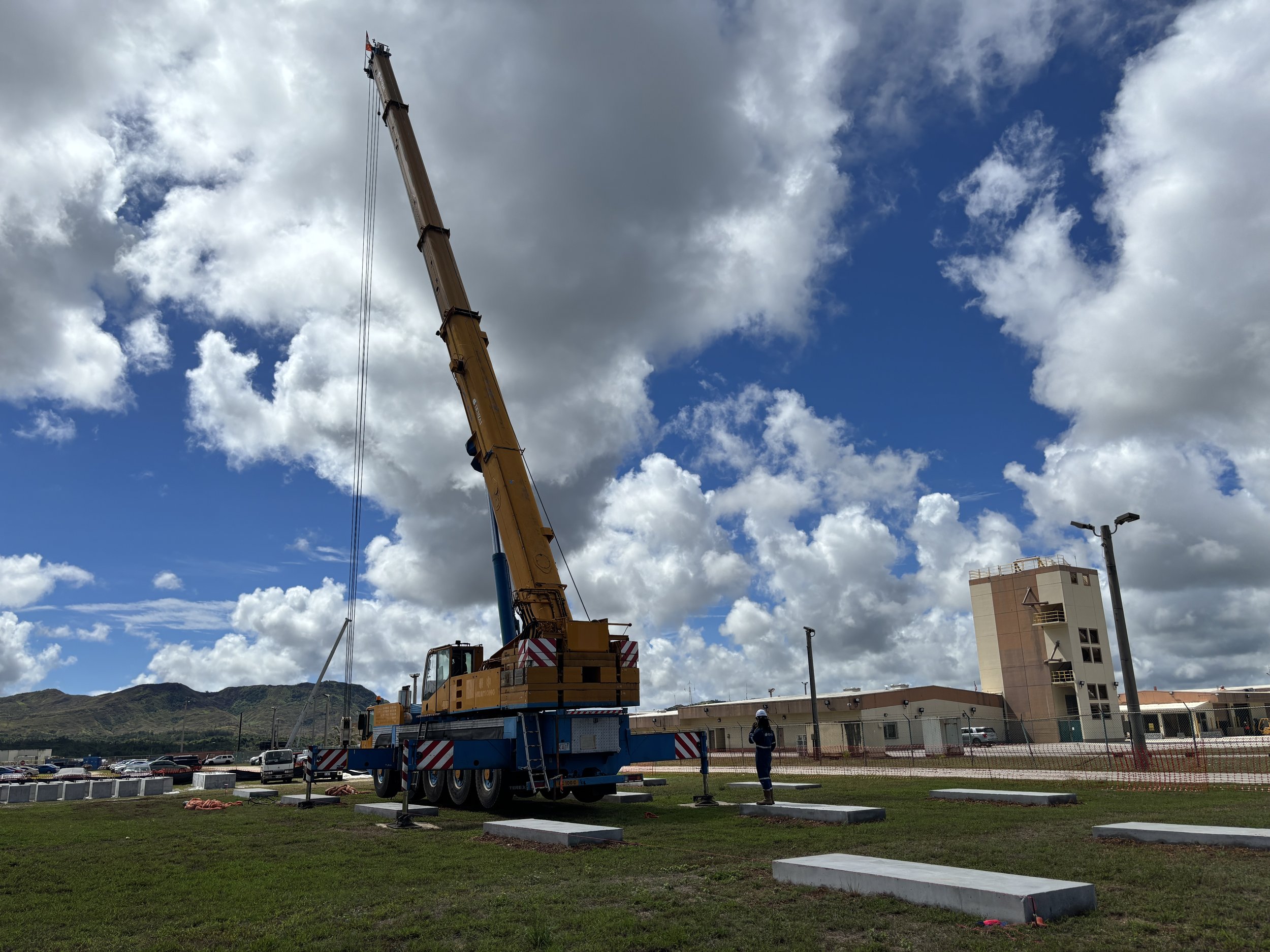
A lot of careful thought goes into a modular building’s design and build—but just as much planning goes into preparing its destination.
Knowing how to prep a site for a modular building is essential to its ability to operate there for as long as needed. A building’s intended location, use, duration of stay, and budget all factor into site preparation.
The process takes about two months for a typical 10,000 square foot building, according to David Cone, vice president of construction services at Modular Management Group. But timelines vary by building size.
Before the process can begin, it’s important to iron out every detail with the site prep team so that everyone involved is on the same page.
Coordinating With the Site Prep Team
The site prep team needs to know the client’s needs, preferences, and any materials they will provide right from the start.
During these initial conversations, the site prep team will learn what type of foundation the client’s modular building needs and whether they’ll provide utilities. The site prep team will also learn about the building’s slated location, access restrictions for delivery and installation, and local weather conditions.
Preparing the Area
Once on site, the prep team can begin clearing the area. On level ground, this process can be as simple as mowing grass and removing brush or debris.
In some cases, the site needs to be graded so that the modular building can sit flat once it has been installed. Leveling the ground is important—if not done properly, the building could start to tilt after installation, which might cause damage and allow moisture to seep in beneath it.
The extent of leveling that’s necessary is part of what the site prep team learns when client communications begin.
Laying the Foundation
A client may pick from a variety of foundation types based on their budget, the building’s intended use, and its planned site duration.
The Basic Option
The easiest site prep option involves placing ABS pads, which support the steel piers and blocking that ultimately hold up the building, on the ground. Concrete masonry units (CMUs) are then stacked on top. The CMUs can also be used to level the site if the topography is uneven.
An auger anchor is then driven into the ground. Later, a strap will connect the auger anchor’s hook to the building’s steel frame to hold it in place. Auger anchors are placed around the perimeter of the building, with the exact number and spacing needed depending on wind, seismic activity, and other environmental factors.
This type of foundation may not be optimal for a client seeking longevity. But for someone who only needs their building to stay in place for a couple of years? “You want to just set it right on the ground—that way, when you pull it out, you’ve got less material to take out,” Cone said.
Strip Footing Foundation
For clients seeking a sturdier base, a strip footing foundation may be worth considering. With this option, a concrete strip about 2 feet wide by 1 foot deep is poured around the perimeter and mate lines of the modular building, providing a “very level, hard place to set your pier on,” Cone explained. It requires less leveling and results in less post-installation settling in colder locations with freeze-thaw cycles.
A structural engineer will advise on the concrete strip’s placement. It’ll typically be poured 12 inches underground but may need to go as deep as 48 inches in colder areas with deep frost lines.
More Advanced Options
Some clients may prefer a complete concrete foundation, like the kind poured for conventional construction buildings. Many site prep teams prefer this option because it makes the installation process easier and is more stable. Concrete is also easier to keep dry—a bonus for site prep teams.
"If the customer is intending on a building to be there for 10-plus, 20-plus years, we would always recommend, at a minimum, a strip footing foundation or a concrete slab—just to give it that longevity,” Cone said.
Others may prefer a pit-set foundation, in which the site prep team digs about 3 feet into the ground so that the modular building can be accessed at grade, giving it a more permanent appearance.
So which option is best? “It really does come down to the dollars and what the customer’s goal is,” Cone said.
Timeline
Strip footing and concrete slab foundations are about 20% faster to prepare than the basic foundation option, which requires more time for ground leveling.
Cost
More robust foundation options tend to come at a higher price. The strip footing foundation option typically adds about 10% to the project’s overall cost, while a concrete slab foundation will add closer to 20%.
Arranging for Utilities
The modular building’s utilities will either be managed by the site prep team or the client—another decision that must be made before site preparation begins to avoid delays later on.
If the site prep team is responsible for the utilities, they first need to locate the fire line, sewer line, and nearest power source. They also must determine how far the connection points are and what needs to happen to make those connections. The site team often coordinates specific utility needs through hired vendors.
If the client handles the utilities, the site prep team will only be responsible for providing the connection points and a list of materials—like the water line or transformer sizes—required to serve the building.
Preparing for Delivery
Identifying site access limitations—including physical constraints and gate access points—early is essential. Without understanding what limitations exist, it will be difficult for the site prep team to ensure that they have the equipment needed to place the building once it arrives. If they don’t, there will be timing and cost implications.
Height and width constraints can present big challenges—and may ultimately impact the building’s design. Bridges or gates that are on or near the site could introduce these kinds of limitations, as the modular building ultimately needs to be moved past these barriers to reach its destination. “That’s all analysis that we do at the front end,” Cone said.
The site prep team will map out the best route for transporting the modular building. If the space is tight, a crane may be needed to lift and place it.
How Site Prep Differs for Residential and Commercial Modulars
The steps involved with preparing a residential modular building site tend to be simple. This is because the more basic foundation option is typically used, with no concrete pouring involved.
Site prep for commercial modular buildings is more complicated because site prep teams provide more robust skirting detail to close off the building’s crawl space. They also may add venting to keep that crawl space dry and do heat tracing to keep water lines from freezing.
The Biggest Mistake
Many errors can be avoided by ensuring clear client-site prep team communication. The site superintendent is on site from the very beginning, and the prep team in turn oversees all subcontractors through installation.
But it’s most important to prevent water from touching the modular building. To avoid this, it’s essential that the site be leveled and graded to reroute any positive drainage.
“That’s really the big thing—especially when we're doing a strip footing foundation or concrete slab foundation,” Cone explained. Site prep teams typically grade sites so that the ABS pads are placed slightly higher on the ground, driving positive drainage away from where the building will sit.
Skipping this preventative step can result in moisture gathering beneath the building in damp or cold weather, which can turn into mold, mildew, and rot.
“The death of a modular building is that water intrusion,” Cone said. “That’s really the challenge with modular: keeping it dry.”
Ready to get started? Contact Universal Modular today to get a quote for your modular building.