
How to Incorporate Non-Combustible Materials Into Modular Buildings
Combustible materials are used by default in modular buildings to save time and money—but there are benefits to using non-combustibles.
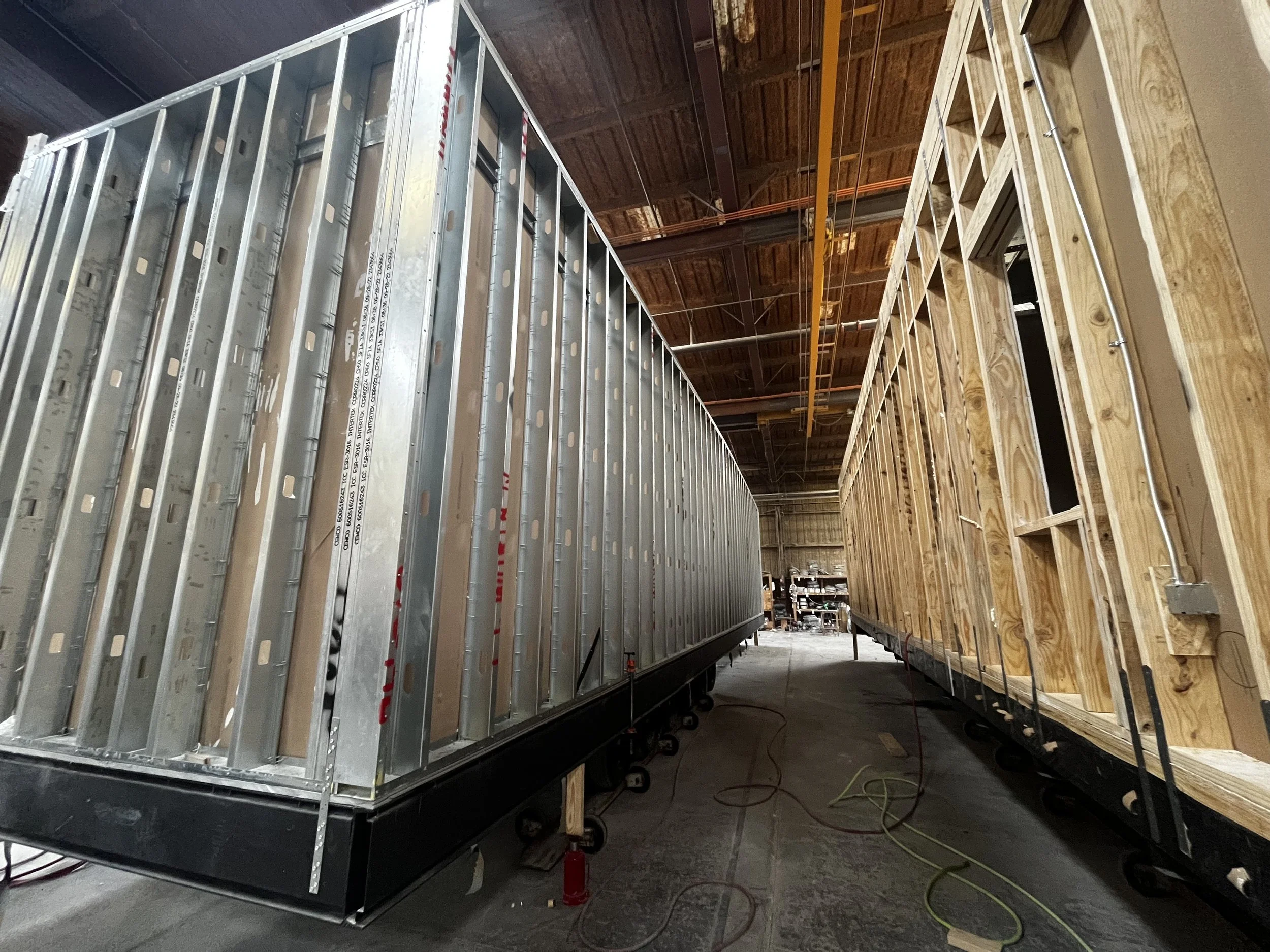
These two under-construction modular buildings show Type VB combustible materials (right) and Type IIB non-combustible (left). Photo courtesy Modular Management Group
Most modular construction projects are built with combustible materials. This is because combustible materials—like wood, the default for standard modular projects—are typically cheaper and more convenient to work with.
But there are benefits to using non-combustible materials, particularly when it comes to safety and code compliance. The purpose of using non-combustible materials is to lower the risk of fire and its speed of spread beyond the sprinklers and alarms used in traditional modular builds. The increased fire resistance means there are fewer operational restrictions for non-combustible modular buildings—and with more factories starting to offer these materials, it’s becoming easier to make them.
Opting to construct with non-combustible materials will impact a project’s cost and build time, and clients should be aware that building codes differ at the local, state, and international levels. That’s why it’s important to seek expert advice before starting on a new project, according to Becca Palluth, the vice president of design services at Modular Management Group.
Materials Used in Non-Combustible Builds
“When you go non-combustible, everything becomes metal or a composite plastic material that is non-combustible,” Palluth said. “It means the structure of the building—instead of it being wood—becomes steel columns and light-gauge metal framing, which is very typical in ground-up construction and conventional construction but is atypical for modular.”
In terms of external customization, there are fewer restrictions for building finishes, as most finishes used by modular construction companies are already non-combustible.
Depending on which codes need to be met, a client may opt to use some non-combustible materials without making their project 100% non-combustible. In these cases, fire-retardant plywood or vinyl may be used. Other wood substrates like Gypsum board have varying fire ratings and could also be incorporated.
But if a modular building is to be purely non-combustible, “that goes down to every layer of the building—of which there are many,” Palluth said.
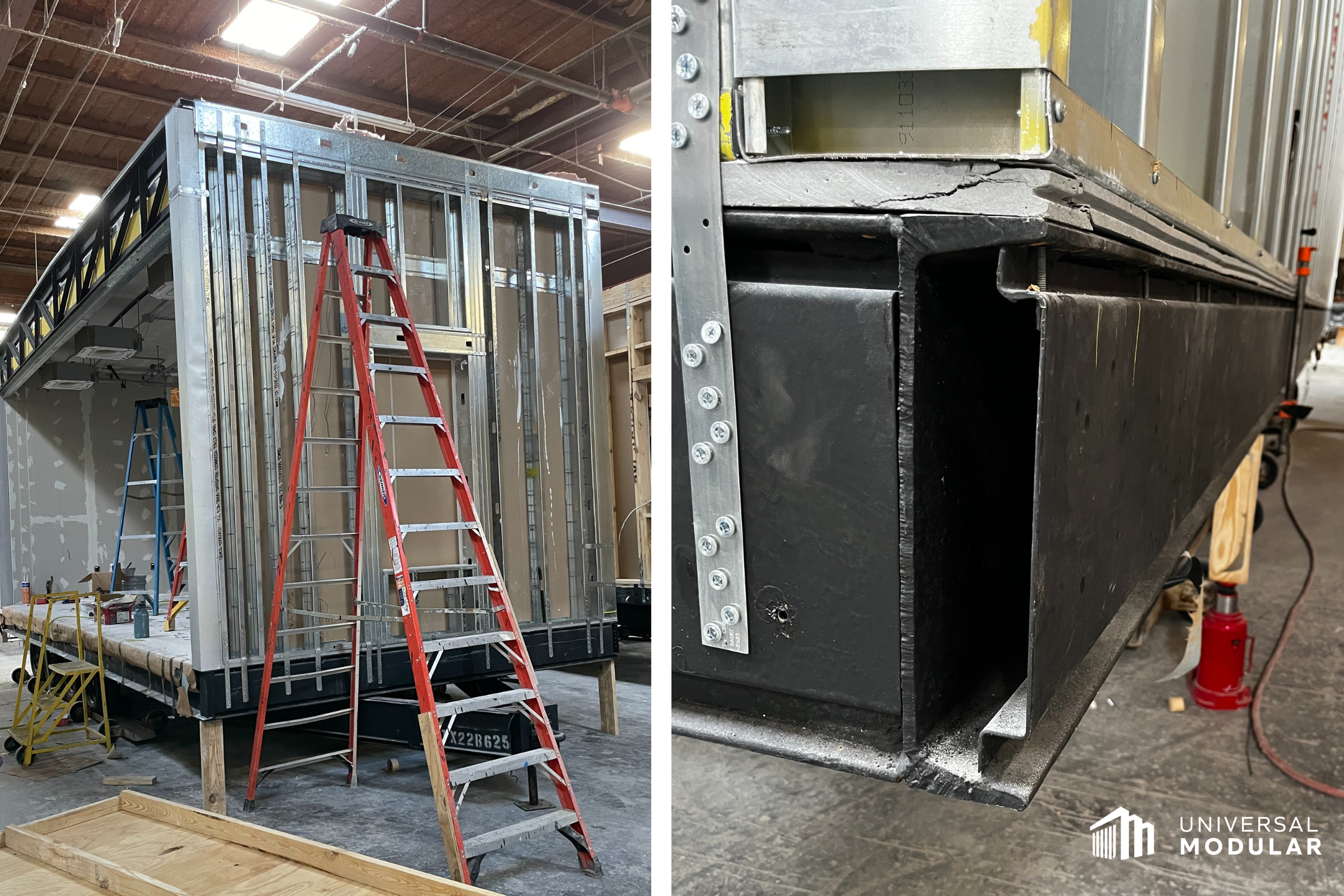
In this modular breakroom constructed for Southwest Airlines at Austin International Airport, type IIB non-combustible materials were used. Photo courtesy Modular Management Group
Restrictions Involved With Combustible Material Use
The two main restrictions that come with using combustible materials concern building size and location. The size of a combustible modular building is “restricted to a certain equation based on occupancy and distance from other buildings,” Palluth explained—and that distance is also restricted.
For example, a combustible modular can’t be placed within a foot or two of an existing facility because it inherently brings a risk of combustion. It can’t be placed inside an existing facility for the same reason.
But this doesn’t mean combustible modular buildings will go out of style.
“I certainly think conventional wood combustible construction is always going to have its place in the modular world,” Palluth said. “I do think we're going to see more and more non-combustible, especially in government—and particularly in commercial—work.”
Projects That Benefit From Non-Combustible Materials
Unlike combustible builds, non-combustible modular buildings can be placed inside existing facilities. They can also be placed adjacent to different kinds of buildings, regardless of their occupancy type, because non-combustible materials present less safety risk.
Projects intended for placement at airports are typically made with non-combustible materials, as airports tend to have stricter codes for modular facilities. Non-combustible materials may also be preferable for projects intended to house data centers. This is because there are “higher restrictions or expectations in a data center for controlling against fire,” Palluth said.
“Data and networks are very valuable—and the minute they're damaged, your whole productivity goes down, whether you're the federal government running missions or you're a school and your internet is destroyed,” Palluth explained. “It makes sense that non-combustible construction could be the future of a lot of this.”
How Code Restrictions Vary
In addition to the International Building Code, the International Fire Code, and National Fire Protection Agency codes, modular buildings must meet the requirements spelled out in other federal and state codes, some of which limit combustible material use. These codes vary by location. In California, for example, seismic design plays a role in some amendment codes due to earthquake concerns in the state.
Some cities, towns, and high-traffic locations like airports may have their own codes as well, which is why it’s vital for clients to consult with experts to make sure their project meets every requirement.
Licensed architects like Palluth are familiar with what these requirements entail. “We just need to make sure we’re layering those things together to be sure we’re complying with all of those codes,” she said.
Project Timeline Impacts
Because combustible materials are used by default in modular buildings, switching to non-combustible materials requires a factory to reset its tooling and manufacturing components to ensure that it’s meeting all of a project’s required codes. Palluth compares the shift to an automobile assembly line that suddenly needs to swap in a new steering wheel. Though doable, it takes time for that assembly line to fall into a new rhythm.
For factories that don’t ordinarily work with non-combustible materials, “the timeline for fabrication can go up 1.5 times, because the first few will take longer to build,” Palluth said.
There are, however, a growing number of factories that work with non-combustible materials often and are capable of tackling non-combustible projects with fewer delays.
Cost Differences
The price tag for a non-combustible modular building can be 1.3 to 1.5 times that of a combustible modular building because of the extra time required for the build and the more costly and specialized materials that must be used.
The actual cost of a modular project will depend on several factors, including the materials used, its size—with price per square foot dropping the larger the building needs to be—and the distance it needs to travel to reach its final destination.
Are you ready to explore non-combustible options for your modular building? Reach out to UMI today to get a quote.